Showing posts with label #agile #scrum #kanban #team #agilecoach #teamroom #feedback #system. Show all posts

Wednesday, October 18, 2017

Interconnection between elements of Feedback

This is the third blog in the "How to delivery effective feedback" series.  You can read the first and second blogs here

In this blog we will look into the elements of a feedback system. 

As stated in above slide, a feedback has 4 elements. 1) Receptor, 2) Stimulus, 3) Effector and 4) Response. If you will notice, Receptor and Effectors are organs, which means, they are physical things. Whereas Stimulus and Response are the actions, which those physical things perform.

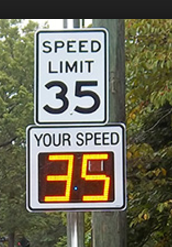
Let's understand them in the context of a "Speed-Sign" example.

You see a speed sign and one of two things might happen. If you are going fast then you will try to reduce your speed or if you are going slow then you may speed up. So in this example Eye is a receptor and Foot is an effector. And imagine you are going at the speed of 38 miles per hour, which is your stimulus then your response would be slow-down. If you are going at the speed of 22 miles per hours then your response would be to speed-up. 

We will try to look at the Models for Giving Feedback in next blog. 

Thanks
Manisha

Sunday, August 13, 2017

Looking at Feedback using System Lens


This is the second blog in the "How to delivery effective feedback" series.  You can read the first blog here

"System thinking begins when first you see the world through the eyes of another- C West Churchman".   

Like any other topic, feedback can’t be understood completely without using system lens. As we all know, System theory has a very simple premise, everything is a system, and system are made out of small system.  So as per system thinkers, what do you believe a feedback can be?    A SYSTEM!!! (Yayyy!! You got it)

System lens provides us a wide-angle view of a situation. It forces us to understand the art and science of inferring a behavior by developing an increasingly deep understanding of underlying structure/surroundings. To get an deeper view of the word systemplease read my previous blog. If you think yourself as a system, you are constantly getting feedback (input) and you are constantly applying those input to produce desired result. Someone again gives you feedback based on those output. This is a loop and hence the origin of word Feedback Loop.


Feedback loop is a system which help us understand a behavior over time. There are two types of feedback loop.
  • Reinforcing Feedback Loop 
  • Balancing Feedback Loop 
Reinforcing Feedback Loop 
A feedback loop occurs when a change in something ultimately comes back to cause a further change in the same thing. If the further change is in the same direction it’s a reinforcing loop.


In other words, Reinforcing loop is where feedback either amplifies/accelerates a behavior or it suppresses/diminishes the behavior. i.e. it caused someone or something to be done more or less. An example of a reinforcing loop is Population Growth. As population goes up, so does births per year. As that goes up, so does future population. The loop goes round and round, growing exponentially until the loop hits its limits. 
Remember reinforcing loop is not good or bad feedback but they are one kind of feedback, which generate change in the same direction.

Balancing Feedback Loop
Balancing feedback loop is equilibrating or goal-seeking structures in systems and is both source of stability and resistance to change. Balancing loops are where feedback supports a system to stabilize and move towards a stable goal. Great example of a balancing loop is a Thermostat. Suppose you set the target temperature to 65 degrees. The higher the target the greater the temperature gap. The greater the gap the more heat that flows into the system. That increases the temperature. As this goes up the temperature gap goes down. It keeps going down until the gap is zero, at which point the system has reached the target


We have just scratched the surface here. Feedback loops are the main reason a system’s behavior is emergent. Please refer to "Thinking in Systems"  by Donella H. Meadows for further read. 

We will try to look at the Interconnectionbetween Feedback's elements in next blog. 

Enjoy
Manisha

Monday, May 29, 2017

How to deliver effective feedback?

I recently gave a talk on ways to effectively give and receive feedback at "Path To Agility" conference. This topic is so very important to me so thought of writing a blog on the same topic as well.

I divided my presentation in 5 parts. 

1) History and Importance of Feedback
2) Looking at Feedback using System Lens
3) Interconnection between elements of Feedback
4) Models for Giving Feedback
5) Models for Receiving Feedback. 

My goal for this blog is to share all the learning so we all can live in a state where we can constantly grow and be more effective with the feedback without getting scared. Let’s beginning.

"We can't solve the problems by using same kind of thinking we used to create them. - Albert Einstein". 

History and Importance of Feedback


I was wondering why we call it a Feedback vs. “Talking to each other” or “Get ready for humiliation”.  I found out the term feedback was coined in 1860s during industrial revolution to describe the way that outputs energy, momentum or signals are returned to their point of origin in a mechanical system.

In 1909 Karl Braum was using the phrase, feedback, to describe the coupling and loops between components of an electronic circuit. It’s only after world war 2 the terms begin to be used in industrial relationship when talking about people and performance management. Feed corrective information back to the point of origin, that would be you! The employee.

Did I mention the term performance management!!! I would like to share some numbers around it. Estimate suggests that 50 to 90% of the employee will receive their performance feedback this year. And across globe 825 million work hours (a cumulative of 94,000 years) are spent each year preparing for and engaging in annual reviews.  Oh Boy!!!! To successfully utilize these hours we really need to be good in giving and receiving feedback.

Feedback can be important for various reasons like “Identify areas of improvement”, “Motivate behavioral changes”,  “Help when you are  stuck”, “For  recognition” or “Tool for continuous learning”.  We all pretty much aware of it’s goodness.  But still to few of us the receving critical feedback sometimes feels like colonoscopy.  It is because receiving Feedback sits at the cruxs of two very human needs:

-       The need to learn and grow (which is so very hard wired in us).
-       The need to be accepted, respected and loved just the way you are now. 

The fact of feedback is making sure that how you are right now! is not A OKAY and tells us that there is something to change. Critical feedback will still going to hurt us but if we will remember few tips, we will be able to handle and engage in conversations more skillfully to attain maximum benefit . 

We will try to look at the Feedback word using System lens in next blog. 

Thanks
Manisha